

When a company needs custom corrugated boxes, choosing the right printing technology can make a significant difference in cost, production times, and visual quality. The two most common options are digital printing and flexographic printing, but which one is the right choice? Digital Printing vs. Flexographic Printing
The answer mainly depends on production volume, level of customization, and how quickly the project needs to be completed. Understanding the differences between both technologies helps businesses make smarter decisions and avoid producing packaging that does not fit their actual needs.
Digital Printing for Corrugated Boxes
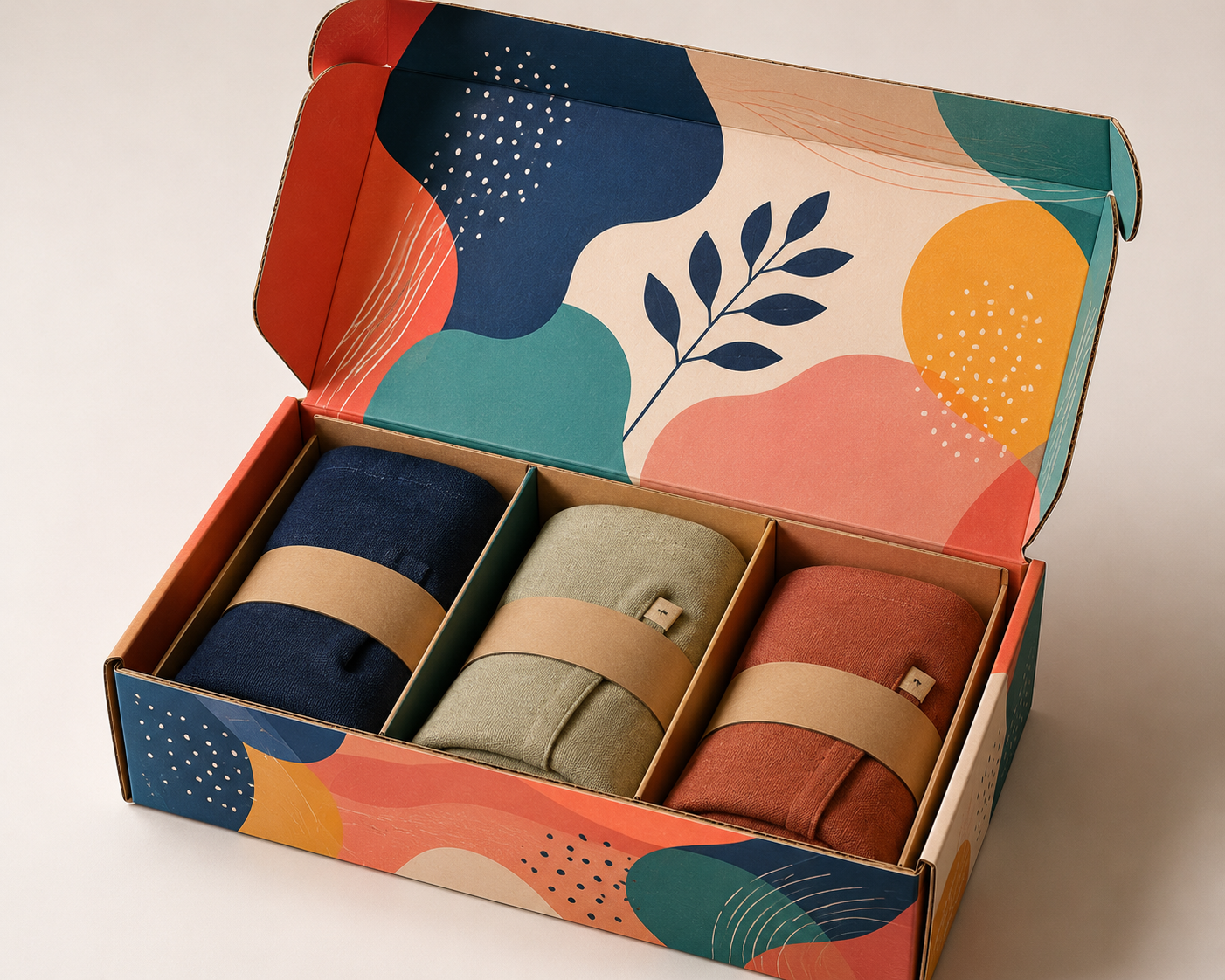
Digital printing on corrugated cardboard allows designs to be printed directly onto the material without the need for traditional printing plates or tooling. This makes it easier to produce customized designs and make changes quickly.
One of its main advantages is that it is particularly suitable for short and medium production runs, product launches, promotional campaigns, limited editions, and market testing.
It also allows brands to create different designs within the same production run, which is especially useful for companies with multiple products or marketing campaigns.
In addition, digital printing makes it possible to incorporate elements such as QR codes, variable graphics, and customized designs, turning the box into a powerful communication and branding tool.
Flexographic Printing for Large Volumes
Flexographic printing for corrugated boxes is widely used for high-volume production. Its process requires the preparation of printing plates, making it particularly suitable for producing large quantities of the same design.
For companies that need thousands or even millions of boxes with consistent branding, flexographic printing can provide an efficient and competitive solution.
Therefore, the question is not which technology is “better,” but rather which one best fits the characteristics of each project.
Digital Printing vs. Flexography: Which Should You Choose?
The decision can be simplified by considering several key factors:
Digital printing:
Ideal for short and medium runs, customization, product launches, temporary campaigns, and on-demand production.
Flexographic printing:
Best suited for large volumes, consistent designs, and repetitive production runs.
If a brand needs to test a new product before moving into mass production, digital printing can provide greater flexibility. On the other hand, if there is consistent demand and large quantities of boxes with the same design are required, flexographic printing may be a more efficient option.
Custom Corrugated Boxes for Ecommerce and Product Launches
The growth of ecommerce and the increasing importance of the unboxing experience have also made packaging design more strategic. A customized box can reinforce branding from the moment the product reaches the consumer.
For product launches, promotions, and limited editions, digital printing on corrugated boxes allows brands to quickly adapt designs and produce only the quantities they need, reducing the risk of excess packaging inventory.
Which Printing Technology Is Right for Your Brand?
The best printing technology depends on the project. If you are looking for flexibility, customization, and short production runs, digital printing can be an excellent option. If you need large volumes of the same design, flexographic printing may be more suitable.
The key is to evaluate production volume, budget, turnaround times, level of customization, and how frequently the design will change.
In a market where brands need to respond faster than ever, choosing the right printing technology can become a competitive advantage. And in many cases, the question isn’t digital or flexography, but rather which technology does your project actually need?
With Cyecsa / Kibox, you will have the peace of mind that you are working with a company that cares ecologically, socially, and economically.
If you want more information, connect with us via Kibot for a personalized consultation